Your Health Today Is an Investment in Generations to Come
Why This Moment Matters More Than You Think
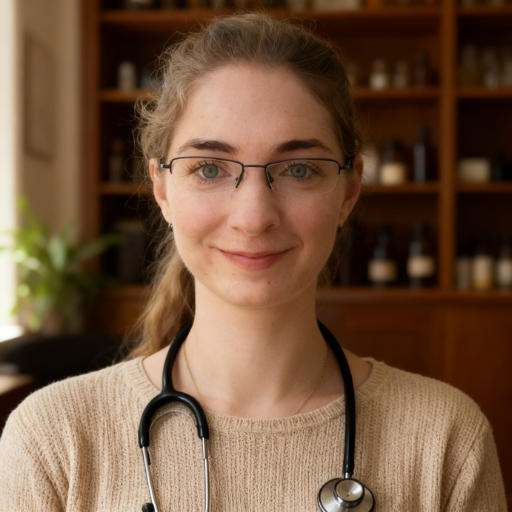
I became a naturopathic physician because I kept seeing the same gap — and it frustrated me. Women were sitting across from doctors being told to try for another six months, or being handed a birth control prescription for teenage acne, or hearing 'there's nothing wrong with you' after years of debilitating pain. And in each of those cases, something important was being missed.
The body wasn't broken. It was signaling.
That distinction is at the core of everything I do.
Fertility Is a Vital Sign
We tend to think about fertility as one narrow thing — the ability to get pregnant. But from a naturopathic perspective, fertility is actually one of the most important indicators of your overall health.
Just like your heart rate, blood pressure, and respiratory rate, your menstrual cycle tells you something essential about what is happening inside your body. When a woman's cycle is irregular, painful, or absent, that is not just a reproductive problem. It is the body's way of communicating that something in the broader system needs attention — hormonal balance, metabolic health, inflammation, toxin exposure, or something else entirely.
The body in a healthy and safe state is naturally fertile during a woman's childbearing years. That is what it is designed to do. When that capacity is compromised, we need to ask why — not just try to override it.
What Got Me Here
Two things shaped my path into this work. The first was encountering the research of Dr. Weston A. Price, a dentist who traveled the world in the early 20th century and documented the stark differences in health between traditional cultures and those who had adopted a westernized diet. The changes he observed — in dental structure, immunity, and overall resilience — appeared within a single generation. What parents ate was literally shaping how their children built their bodies.
The second was watching friends, patients, and my own sister navigate a maternal healthcare system that often left them feeling unsupported, unheard, and uninformed about the real options available to them.
Both of those experiences pointed me in the same direction: the foundations of health matter more than most people realize, and the window around preconception and pregnancy is one of the most powerful opportunities we have to shape long-term health — not just for ourselves, but for our children.
The Root Cause Is Almost Always in the Foundations
I think of health like building a house. You can spend all the time and money you want on beautiful interior design — new wallpaper, updated fixtures, fresh paint. But if the foundation is cracked, those cracks will keep appearing no matter how many times you patch them. The cosmetic fixes don't hold.
That is what happens when we treat symptoms without addressing their root cause. A pill can quiet a painful period. It cannot fix what is causing that pain.
In my practice, the foundations I address first are nutrition, lifestyle, sleep, stress, relationships, and spiritual health. These are what I call the determinants of health — and they are the legs of the table. You can remove one leg and the table might still stand, but it will not be stable. You need all of them.
From there, we work upward: removing obstacles to healing, supporting the body's own intelligence, and — only where needed — using targeted supplementation or herbal medicine. The more intense interventions, like pharmaceuticals, are the last resort, not the first step. This is the order that honors how healing actually works.
The Science Is on the Side of This Approach
One of the most exciting areas of research right now is epigenetics — the study of how genes are expressed, not just what genes you carry. This is important because most people have been told their health is 'genetic,' as if there is nothing they can do about it.
That is simply not true.
While we cannot change our DNA, we absolutely influence how our genes behave. Through diet, lifestyle, and the environment we create for our bodies, we are constantly sending signals that turn gene expression on or off. And here is what makes this even more significant: those signals don't just affect you. They affect your children. The health of an egg, the environment of the womb, the nutritional signals a baby receives during development — all of this shapes that child's metabolism, immune function, brain development, and long-term disease risk.
This is both humbling and hopeful. It means more than 40% of school-age children in the US having at least one chronic disease is not an inevitability. It means the choices we make today — you, right now — are investments in a health trajectory that can change.
Where to Start
If you are in your preconception season, or you are pregnant, or you are postpartum, or you are simply a woman who knows her hormones haven't felt right for a while — you don't have to wait for a diagnosis to start building a stronger foundation.
Real, nutrient-dense foods. Consistent sleep. Managing your stress load. Understanding your cycle. These aren't small things. They are the building blocks.
And if you are ready to go deeper — to work with someone who will look at the whole picture, your unique health history, your lifestyle, your labs, and your goals — that is exactly what I am here for.
The health of your family, for generations to come, starts now.